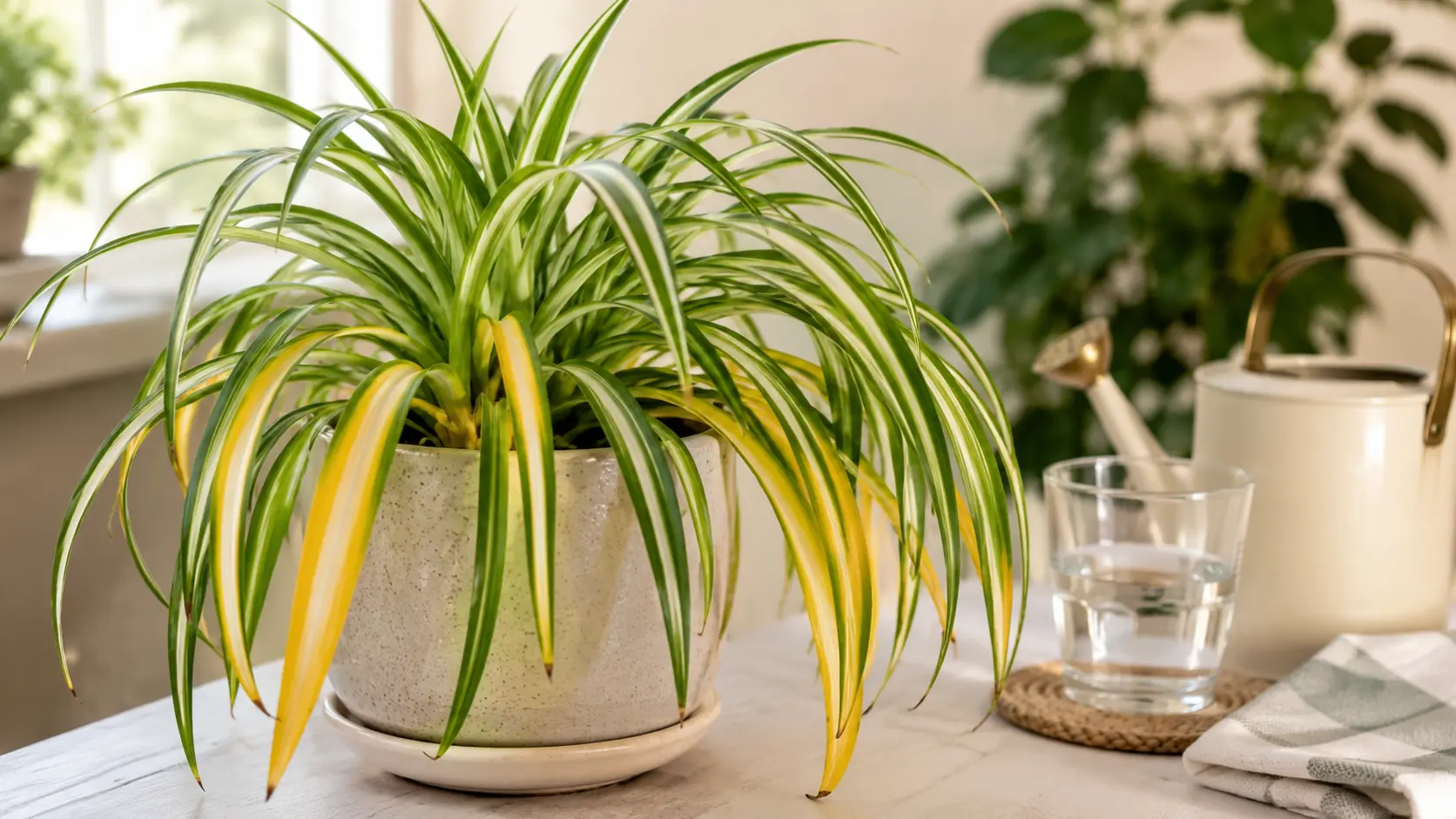
Spider plant yellow leaves: quick answer
Spider plant yellow leaves are usually caused by watering problems, poor drainage, light stress, root issues, old leaves, or a sudden care change. Overwatering is one of the most common causes, especially if the soil stays wet for too long or the pot does not drain well. Underwatering, low light, harsh direct sun, root crowding, fertilizer problems, pests, and normal older leaf aging can also make spider plant leaves turn yellow.
A few yellow leaves do not always mean your spider plant is dying. The pattern matters. One old lower leaf turning yellow is very different from many soft yellow leaves appearing at once.
Why spider plant leaves turn yellow
Spider plant leaves turn yellow when the plant is stressed or when an older leaf is naturally shutting down. The most common stress causes are too much water, too little water, poor light, root trouble, or a sudden change in growing conditions.
Yellow leaves will not turn green again. The goal is to find the cause, remove badly damaged leaves, and help the plant produce healthy new growth.
Common causes of yellow leaves on a spider plant
1. Overwatering or soggy soil
Overwatering is one of the most common reasons spider plant leaves turn yellow. When the soil stays wet for too long, roots can struggle to get oxygen. Damaged roots cannot take up water properly, so the plant may look yellow, soft, limp, or droopy even though the soil is wet.
Signs overwatering may be the cause:
- several leaves turn yellow at once
- leaves feel soft or limp
- soil stays wet for many days
- pot has no drainage hole
- saucer stays full of water
- fungus gnats appear around the soil
- roots smell bad or look brown and mushy
What to do:
- stop watering until the top part of the soil dries
- check that the pot has drainage holes
- empty the saucer after watering
- move the plant to brighter indirect light
- repot if the soil is sour, compacted, or staying wet too long
- trim off mushy or rotted roots if root rot is present
Do not water on a fixed schedule. Check the soil first.
2. Underwatering or very dry soil
Spider plants can tolerate some inconsistent watering because they have thick roots that store moisture, but they can still yellow if the soil stays too dry for too long.
Signs underwatering may be the cause:
- soil is very dry or pulling away from the pot
- the pot feels very light
- leaves look pale, folded, or limp
- tips may also turn brown and crispy
- the plant perks up after a deep watering
What to do:
- water thoroughly until water drains from the bottom
- let the pot drain completely
- check the plant more often during hot or bright weather
- avoid giving only tiny sips of water
- consider repotting if the soil has become hydrophobic and no longer absorbs water well
3. Too much direct sun
Spider plants like bright, indirect light. Harsh direct sun can scorch the leaves and make them yellow, pale, bleached, or crispy.
Signs too much sun may be the cause:
- yellowing is worse on the window-facing side
- leaves look faded or bleached
- brown crispy patches appear
- the plant recently moved to a brighter window
- the pot sits in strong afternoon sun
What to do:
- move the plant into bright indirect light
- avoid intense afternoon sun
- use a sheer curtain if the window is too strong
- remove badly damaged leaves once the plant is stable
4. Not enough light
Too little light can also make a spider plant weak, pale, and yellow over time. In low light, the plant cannot produce enough energy to support healthy growth.
Signs low light may be involved:
- leaves look pale rather than rich green
- growth is slow
- the plant leans toward the window
- variegated leaves lose contrast
- soil stays wet longer than normal
What to do:
- move the plant closer to a bright window
- choose bright indirect light
- avoid a dark corner
- rotate the pot every week or two
- reduce watering slightly until growth improves
5. Natural older leaf aging
Not every yellow leaf is a problem. Older spider plant leaves can naturally turn yellow and die as the plant grows.
This is likely normal if:
- only one or two older outer leaves are yellow
- new growth looks healthy
- soil moisture is normal
- the plant is not drooping
- yellowing is slow, not sudden
What to do:
- trim the yellow leaf near the base with clean scissors
- keep normal care steady
- watch new growth rather than old leaves
If many leaves turn yellow at once, it is more likely a care problem than normal aging.
6. Root crowding or root stress
Spider plants can tolerate being a little pot-bound, but severe root crowding can make watering difficult. A crowded root ball may dry too fast, hold water unevenly, or struggle to support healthy leaves.
Signs root crowding may be the cause:
- roots circle tightly inside the pot
- roots come out of drainage holes
- water runs straight through the pot
- plant dries out very quickly
- yellow leaves appear with slow growth
- plant has not been repotted for a long time
What to do:
- gently slide the plant out and check the roots
- repot into a slightly larger container if badly crowded
- use fresh, well-draining potting mix
- avoid moving into a huge pot, because excess soil can stay wet too long
7. Fertilizer or nutrient problems
Spider plants do not need heavy feeding. Too much fertilizer can damage roots through salt buildup, while very depleted soil can sometimes contribute to pale or yellow leaves.
Signs fertilizer may be involved:
- white crust appears on soil or pot edges
- leaf tips are brown as well as yellow
- you fertilize often or strongly
- plant is in old potting mix
- growth is weak during the growing season
What to do:
- stop fertilizing if you have been feeding heavily
- flush the soil with clean water and let it drain
- use a diluted houseplant fertilizer only during active growth
- refresh the potting mix if it is old, compacted, or crusty
8. Pests
Spider plants are not usually pest-heavy, but pests can still weaken leaves and cause yellowing, spotting, or pale patches.
Check for:
- sticky residue
- webbing
- tiny moving dots
- white cottony clusters
- yellow speckling
- damaged new growth
What to do:
- isolate the plant if pests are visible
- wipe leaves gently with a damp cloth
- rinse the plant if needed
- remove badly damaged leaves
- treat according to the pest you find
9. Sudden care or environment changes
A spider plant may yellow after being moved, repotted, shipped, divided, exposed to cold, placed near a heater, or shifted into very different light.
Signs stress may be the cause:
- yellowing begins soon after a change
- only a few leaves are affected
- the rest of the plant still looks stable
- new growth eventually appears healthy
What to do:
- keep care steady
- avoid moving the plant repeatedly
- protect it from cold drafts and hot vents
- wait for new growth before making more big changes
How to identify the cause
Use this quick check:
| What you see | Most likely cause |
|---|---|
| Soft yellow leaves and wet soil | overwatering or poor drainage |
| Yellow leaves plus bad-smelling soil | root rot |
| Yellow leaves and very dry soil | underwatering |
| Pale yellow leaves in a dark room | not enough light |
| Bleached yellow leaves near a sunny window | too much direct sun |
| One old lower leaf yellowing | natural aging |
| Yellow leaves plus roots packed tightly | root crowding |
| Yellowing after repotting or moving | environmental stress |
| Yellow speckles, webbing, or sticky residue | pests |
How to fix spider plant yellow leaves
Start with the soil. Soil moisture gives the clearest clue.
- Feel the soil before watering.
- If the soil is wet, wait and improve drainage.
- If the soil is bone dry, water deeply.
- Make sure the pot has drainage holes.
- Empty the saucer after watering.
- Move the plant into bright indirect light.
- Keep it away from harsh direct sun, heaters, and cold drafts.
- Check roots if the plant is yellowing and drooping.
- Remove yellow leaves that are fully damaged.
- Keep care steady and watch the new growth.
Do not try every fix at once. Make the most likely correction first, then watch the plant for new healthy leaves.
Should you cut yellow leaves off a spider plant?
Yes, you can cut yellow leaves off a spider plant if they are mostly yellow, soft, damaged, or not improving. Yellow leaves usually will not turn green again.
Use clean scissors and cut the leaf near the base. Removing dead or dying leaves helps the plant look cleaner and lets you focus on whether new growth is healthy.
Do not remove too many leaves at once if the plant is already weak. Fix the cause first.
Can a yellow spider plant recover?
Yes, a spider plant can recover if the roots and crown are still healthy. The yellow leaves may not turn green again, but new leaves can grow normally after the care problem is fixed.
Recovery is more likely if:
- the center of the plant is firm
- roots are mostly white or light-colored
- new growth is appearing
- yellowing has stopped spreading
Recovery is harder if:
- the crown is mushy
- roots are black, brown, mushy, or smelly
- soil stays wet and sour
- most leaves are collapsing
FAQ
Why are my spider plant leaves turning yellow?
Spider plant leaves usually turn yellow because of overwatering, underwatering, poor drainage, too much direct sun, too little light, root stress, pests, or normal older leaf aging. Check the soil and light first.
Are yellow leaves on a spider plant always bad?
No. One or two older yellow leaves can be normal. Many yellow leaves appearing quickly usually means the plant is stressed.
Can overwatering make spider plant leaves yellow?
Yes. Overwatering can keep roots too wet, leading to root stress or root rot. This often causes yellow leaves, soft leaves, drooping, leaf drop, or fungus gnats.
Can underwatering make spider plant leaves yellow?
Yes. If the soil stays dry too long, spider plant leaves may become pale, yellow, limp, or crispy. A deep watering usually helps if the roots are still healthy.
Should I remove yellow spider plant leaves?
You can remove yellow leaves once they are mostly damaged. Use clean scissors and cut near the base. Yellow leaves usually will not turn green again.
Why is my spider plant turning yellow after repotting?
A spider plant may turn yellow after repotting because of root disturbance, changed watering, different soil, or stress from being moved. Keep it in bright indirect light and avoid overwatering while it adjusts.
Why are my spider plant leaves yellow and brown?
Yellow and brown leaves often point to watering stress, poor drainage, root trouble, direct sun, or mineral/fertilizer buildup. Check the soil moisture, drainage, light, and roots.
Related spider plant problems
- Spider plant brown tips
- Spider plant leaves curling
- Spider plant drooping
- Spider plant root rot
- Spider plant dying