Quick answer
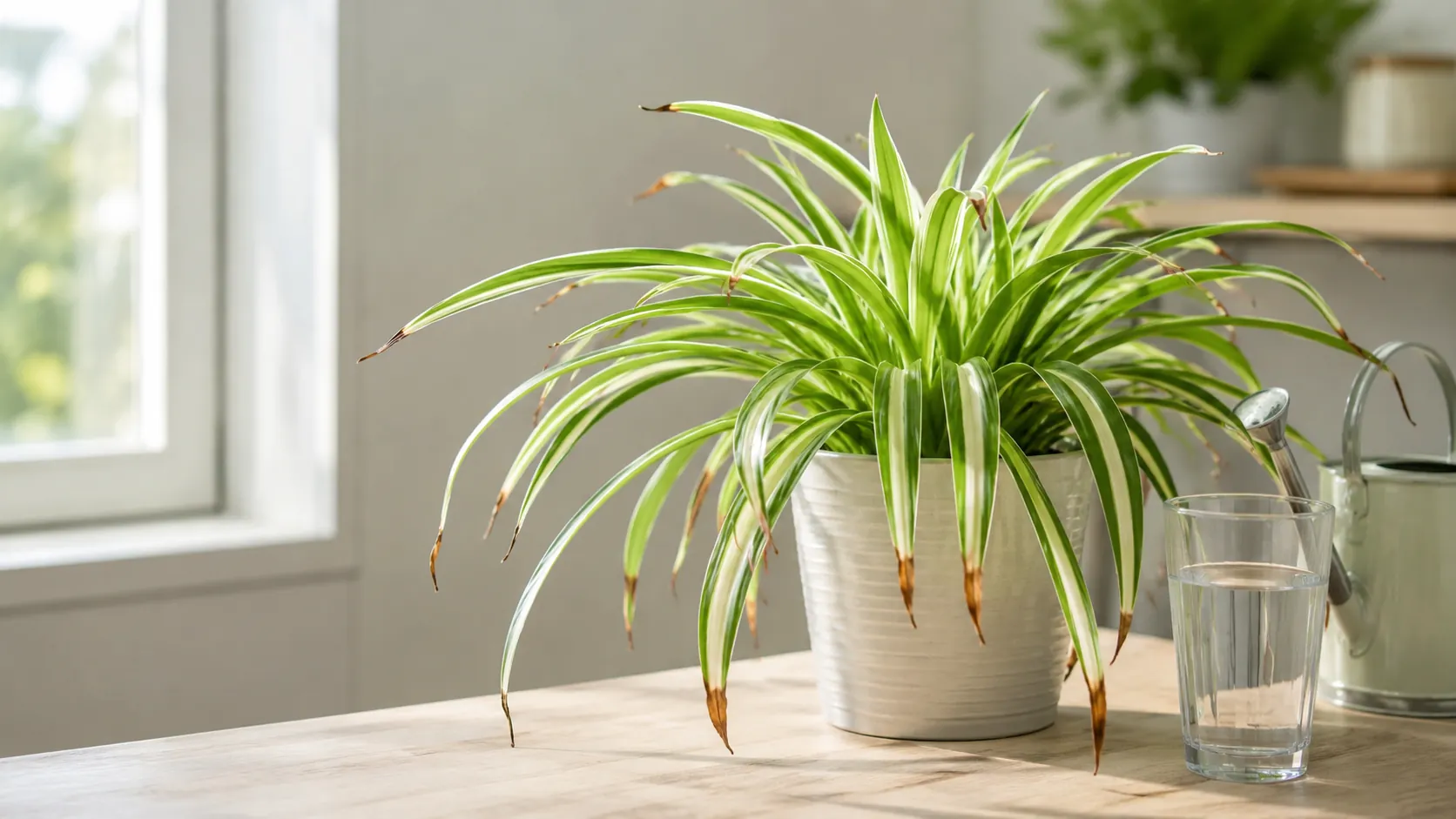
Spider plant brown tips are usually caused by water quality, dry soil, low humidity, fertilizer buildup, or care stress. Tap water minerals and chemicals, especially fluoride, chlorine, and soluble salts, are common causes. Low humidity, letting the soil stay dry too long, too much fertilizer, poor drainage, and strong direct sun can also make the tips turn brown.
Brown tips do not usually mean the whole spider plant is dying. The brown part will not turn green again, but you can stop new tips from browning by fixing the cause.
Common causes of brown tips on a spider plant
1. Tap water chemicals or mineral buildup
Spider plants are known for getting brown leaf tips when minerals or chemicals build up in the soil. This is especially common if you use hard tap water, softened water, or water with fluoride or chlorine.
Signs this may be the cause:
- only the very tips are brown
- the rest of the plant still looks healthy
- browning appears slowly over time
- white crust appears on the soil, pot rim, or drainage holes
- you fertilize often or use tap water every time
What to do:
- switch to rainwater, distilled water, or filtered water if possible
- avoid softened water because it can contain extra salts
- water from the top until water drains out of the bottom
- empty the saucer after watering
- flush the soil every few months to reduce mineral buildup
2. Fertilizer buildup
Too much fertilizer can leave salts in the potting mix. These salts can damage roots and cause brown tips, brown edges, weak growth, or wilting.
This is more likely if:
- you fertilize every week or every watering
- the plant is small but the fertilizer dose is strong
- the soil has white crust
- the leaf tips are browning even though watering seems normal
What to do:
- stop fertilizing for a few weeks
- flush the potting mix with clean water
- let the pot drain fully
- restart fertilizer only during active growth
- use a weak, diluted houseplant fertilizer rather than a strong dose
Spider plants do not need heavy feeding. Light feeding is usually enough.
3. Soil staying too dry for too long
Spider plants have thick roots that help them tolerate some missed watering, but they can still develop brown tips if the soil stays dry too long or watering is inconsistent.
Signs underwatering may be the cause:
- soil pulls away from the edge of the pot
- leaves look pale, limp, or folded
- the pot feels very light
- tips are dry and crispy
- the plant perks up after watering
What to do:
- water thoroughly when the top part of the soil feels dry
- do not give tiny sips of water
- water until excess water drains from the bottom
- check the plant more often in hot, bright, or dry rooms
4. Low humidity or dry indoor air
Low humidity can dry out leaf tips, especially in winter or near heaters, air conditioners, or hot windows.
Signs dry air may be involved:
- multiple leaves have dry crispy tips
- soil dries very quickly
- browning is worse in winter
- the plant is near a vent, heater, or drafty window
What to do:
- move the plant away from heaters and air vents
- group it with other houseplants
- place it in a room with steadier humidity
- use a humidifier if the room is very dry
Misting may make the plant look fresher for a short time, but it usually does not fix a serious low-humidity problem by itself.
5. Too much direct sun
Spider plants prefer bright, indirect light. Strong direct sun can scorch leaves and make tips or edges turn brown.
Signs sun scorch may be the cause:
- brown areas appear on the side facing the window
- leaves look faded, bleached, or crispy
- the plant sits in harsh afternoon sun
- browning appears after moving the plant to a brighter spot
What to do:
- move the plant into bright indirect light
- avoid intense midday or afternoon sun
- use a sheer curtain if the window is too bright
6. Poor drainage or root stress
If the pot has no drainage hole, the soil stays wet too long, or the roots are crowded, the plant may show stress through brown tips, yellowing, drooping, or root rot.
Check for:
- soggy soil
- bad smell from the pot
- mushy roots
- yellowing leaves along with brown tips
- roots packed tightly around the pot
What to do:
- use a pot with drainage holes
- empty the saucer after watering
- use a well-draining potting mix
- repot if the plant is severely root-bound or the soil stays wet for too long
Spider plants can like being slightly pot-bound, but a badly crowded root system can make watering harder to manage.
How to figure out the most likely cause
Use this quick check:
| What you see | Most likely cause |
|---|---|
| Brown tips, plant otherwise healthy | water quality or salt buildup |
| Brown tips plus white crust on soil | fertilizer or mineral salts |
| Crispy tips and very dry soil | underwatering |
| Brown tips worse in winter | low humidity or dry indoor air |
| Brown patches on window-facing leaves | direct sun scorch |
| Brown tips with yellowing or drooping | watering or root stress |
| Brown tips after frequent feeding | too much fertilizer |
Should you cut the brown tips off a spider plant?
Yes, you can cut brown tips off a spider plant if you want the plant to look cleaner. The brown tissue is dead and will not turn green again.
Use clean scissors and trim only the brown part. You can cut at a slight angle to follow the natural shape of the leaf. Avoid cutting far into healthy green tissue because that can create a fresh damaged edge.
Cutting brown tips improves appearance, but it does not fix the cause. If new tips keep turning brown, check water quality, fertilizer, watering, humidity, light, and drainage.
How to stop new brown tips
To stop new spider plant tips from turning brown:
- Switch to rainwater, distilled water, or filtered water if possible.
- Avoid softened water.
- Water thoroughly, then let the pot drain.
- Do not let the plant sit in standing water.
- Let the soil dry slightly between waterings.
- Reduce fertilizer if you have been feeding often.
- Flush the soil occasionally to remove mineral buildup.
- Keep the plant in bright indirect light.
- Move it away from heaters, vents, and harsh direct sun.
- Repot if the roots are badly crowded or the soil drains poorly.
You may not see instant results because old brown tips will stay brown. Look at the new growth. If new leaves grow clean and green, the care change is working.
Can brown tips mean the spider plant is dying?
Brown tips alone usually do not mean your spider plant is dying. Spider plants are tough houseplants, and brown tips are a common stress sign.
It becomes more serious if brown tips appear with:
- many yellow leaves
- soft or mushy leaves
- drooping that does not improve after watering
- a bad smell from the soil
- black or mushy roots
- fast spreading brown or black patches
If you see those signs, check for overwatering, poor drainage, or root rot.
FAQ
Why are the tips of my spider plant turning brown?
The tips of a spider plant usually turn brown because of water quality, soluble salt buildup, fertilizer excess, dry soil, low humidity, or stress from light and drainage problems. Tap water minerals and chemicals are a common trigger.
Are brown tips on spider plants normal?
Brown tips are common on spider plants, especially indoors. They are not ideal, but they are usually fixable. If the rest of the plant is growing well, brown tips are often a care or water-quality issue rather than a fatal problem.
Should I remove brown tips from my spider plant?
You can remove brown tips with clean scissors. Trim only the dead brown part and avoid cutting too much healthy green tissue. This improves appearance, but you still need to fix the cause if new tips keep browning.
Can tap water cause brown tips on spider plants?
Yes. Tap water can contribute to brown tips if it contains fluoride, chlorine, dissolved minerals, or salts that build up in the soil. Rainwater, distilled water, or filtered water may help if water quality is the problem.
Can too much fertilizer cause spider plant brown tips?
Yes. Too much fertilizer can lead to salt buildup in the potting mix, which can damage roots and cause brown leaf tips. Reduce feeding and flush the soil with clean water if fertilizer buildup is likely.
Will brown tips turn green again?
No. Once the tips turn brown, that tissue will not turn green again. The goal is to stop new browning by correcting the cause.
Related spider plant problems
- Spider plant yellow leaves
- Spider plant leaves curling
- Spider plant drooping
- Spider plant root rot
- Spider plant dying